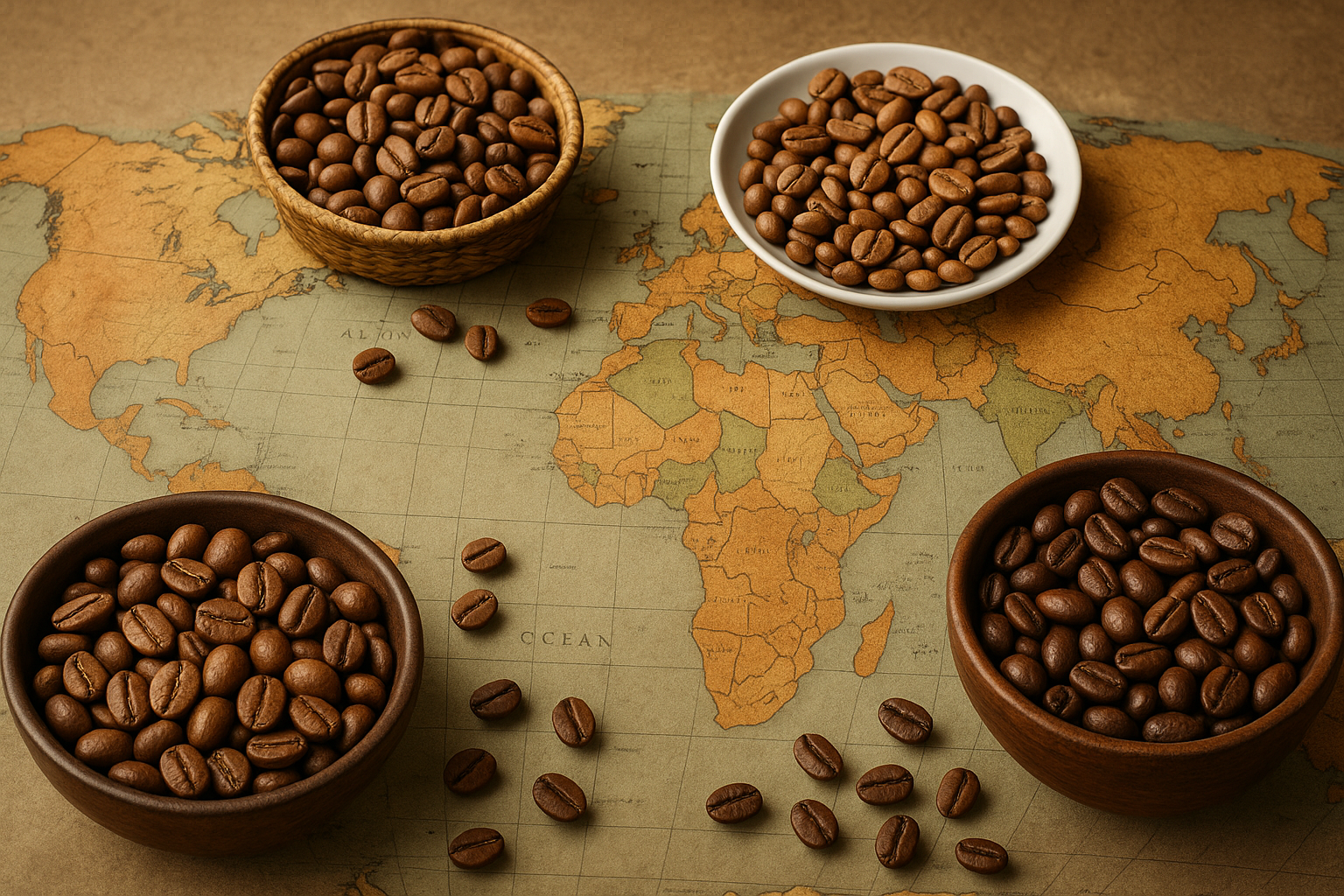
Have you ever wondered why an Ethiopian coffee bursts with fruity, floral notes, while Brazilian beans tend to be chocolatey and nutty? Or why Colombian brews taste smooth and balanced, while Sumatran coffee delivers deep, earthy intensity?
The answer lies in a fascinating mix of terroir, coffee plant varieties, farming traditions, and how beans are processed. In this article, we’ll break down the reasons behind regional flavor differences and help you choose your beans based on taste — not just cost.
What Is “Terroir” and Why Does It Matter?
“Terroir” (pronounced ter-wahr) is a French term meaning “sense of place.” It refers to how local conditions — such as soil, climate, elevation, and rainfall — shape the flavor of agricultural products like wine, tea, and, of course, coffee.
In coffee, terroir can influence everything from acidity and sweetness to body and aroma. Even two farms on the same mountain can produce coffee with distinct flavors depending on slope, sun exposure, and soil richness.
Key elements of coffee terroir include:
- Altitude: Higher altitudes produce brighter, more complex coffees
- Climate: Temperature and rainfall impact how slowly cherries mature
- Soil: Volcanic and mineral-rich soils add depth and intensity
- Shade/sunlight: Affects bean density and sugar content
This is why Ethiopian coffee often tastes like berries or jasmine, while Sumatran coffee brings spicy, earthy tones.
Varieties of Coffee Beans: Like Grapes in Wine
Coffee, like wine, comes in many different botanical varieties, each offering unique flavor profiles. These varieties influence how a bean will taste — even before roasting or brewing.
Popular coffee varieties include:
- Typica: Smooth and sweet, widely cultivated
- Bourbon: Complex acidity, full body, grown across Latin America
- SL28 & SL34: Bold, citrusy beans from Kenya
- Geisha (Gesha): Delicate, floral, and expensive — originally Ethiopian, made famous in Panama
- Caturra, Catuai, Pacamara: Latin American favorites with diverse taste ranges
The variety + terroir = a coffee’s unique identity.
Processing Methods Matter More Than You Think
After harvesting, coffee cherries must be processed to extract the beans — and this step has a massive impact on flavor.
The main processing methods are:
- Washed (wet): Uses water to remove pulp — clean, crisp, acidic results. Common in Ethiopia, Kenya, Colombia.
- Natural (dry): Cherries dry with pulp intact — fruity, sweet, heavier body. Common in Brazil, Ethiopia, Yemen.
- Honey process: Partially removes pulp — blends clarity with sweetness. Seen in Costa Rica and Nicaragua.
Even two coffees from the same farm can taste radically different depending on the processing used.
The Roaster’s Hand: How Roasting Shapes Flavor
Once green beans are ready, roasting transforms them. Roast level can either highlight or mask origin flavors.
- Light roast: High acidity, preserves origin characteristics (floral, fruity)
- Medium roast: Balanced body and acidity
- Dark roast: Bitter, smoky, often overpowers terroir
A light-roasted Ethiopian might taste like jasmine and blueberries. Roast it dark, and you’ll lose those notes to charcoal and cocoa. If you’re seeking flavor from the bean, light or medium is the way to go.
How Elevation Affects Taste
Altitude is one of the strongest predictors of coffee complexity.
- Cooler temps slow cherry development
- Longer maturation leads to higher sugar content
- Denser beans develop richer, more vibrant flavors
Coffees from Colombia, Kenya, Guatemala, and Ethiopia often come from high elevations — and their flavor scores reflect that.
Lower-elevation coffees — such as those from Vietnam and parts of Brazil — ripen faster, and usually produce simpler, more chocolatey profiles.
Regional Flavor Profiles Around the World
Let’s explore what different countries bring to your cup:
Ethiopia
- Fruity, floral, citrus-forward
- Heirloom beans, high altitude
- Natural and washed methods used
Colombia
- Balanced, smooth, with gentle acidity
- Grown in a variety of climates and altitudes
- Mostly washed processed
Brazil
- Chocolatey, nutty, low-acid
- Lower elevation farms
- Natural and pulped natural processes
Kenya
- High acidity, wine-like, notes of blackcurrant
- High altitude, SL varieties
- Washed method dominant
Sumatra
- Earthy, spicy, full-bodied
- Wet-hulled process unique to the region
- Popular in espresso blends
Guatemala
- Rich, chocolatey, sometimes fruity
- Volcanic soil, high elevation
- Washed process
Honduras, Costa Rica, Nicaragua
- Sweet, balanced — often caramel or citrus
- Well-suited for honey processing
Brewing Method Affects Flavor Too
Your brew method also shapes how you experience flavor:
- Pour-over: Enhances clarity and brightness (great for African coffees)
- French press: Heavy body, ideal for Latin American roasts
- Espresso: Intensifies all flavor notes — good and bad
- Cold brew: Smooths acidity, brings out nutty or chocolatey notes
Final Thoughts: Every Cup Has a Story
Coffee is a journey through climate, soil, variety, and process. Understanding these elements helps you appreciate why coffee tastes so different from place to place — and gives you the power to explore intentionally.
So next time you sip a cup, ask yourself: where did this bean come from, and how did it get to taste this way?
The world is full of coffee stories — go out and taste them.