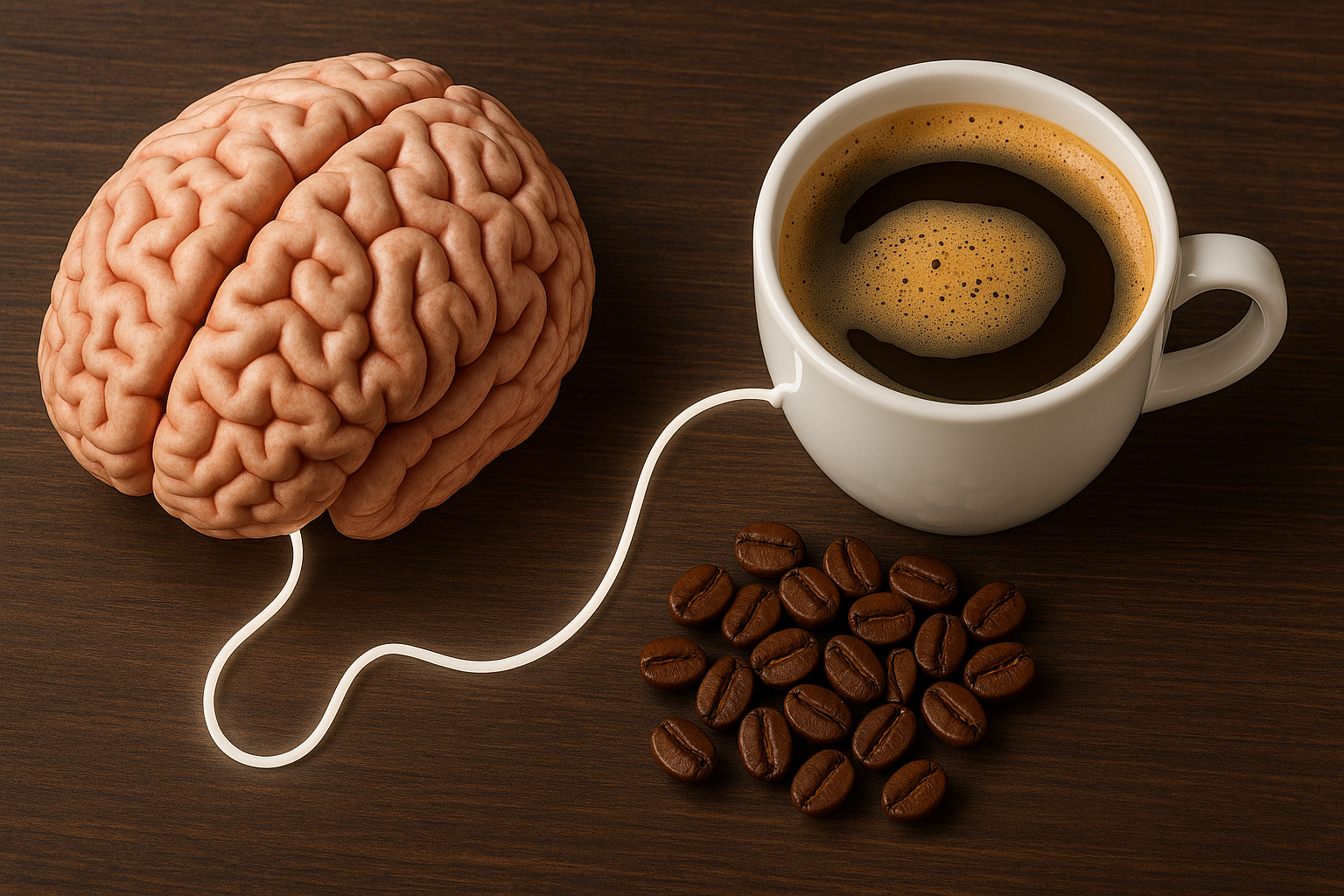
That first cup of coffee in the morning feels almost like magic for many of us. You take a sip, and suddenly your brain switches on, your thoughts become clearer, and your focus sharpens. But what’s really happening in your brain when you drink coffee?
Let’s dive into the neuroscience of caffeine to understand how it affects mood, attention, memory, and why having too much might backfire.
How Caffeine Tricks Your Brain
Caffeine, the powerful compound in coffee, acts as a central nervous system stimulant. But rather than flooding your brain with new chemicals, it works by disrupting your natural brain signals.
It imitates a molecule called adenosine — a neurotransmitter that builds up throughout the day and makes you sleepy. Caffeine sneaks into adenosine’s place, blocking its receptors and keeping your brain from feeling tired.
This means even if your body is exhausted, your brain doesn’t get the memo. Neurons stay active, and you feel more alert and awake.
Why Coffee Boosts Your Mood: The Dopamine Connection
When adenosine is blocked, it indirectly allows dopamine — the “feel-good” chemical — to work more effectively.
Dopamine plays a major role in motivation, pleasure, and emotional balance. Caffeine increases its activity in key parts of the brain like the prefrontal cortex, improving:
- Mood
- Reaction speed
- Short-term memory
This feel-good effect is one reason why skipping your usual coffee can feel slightly “off” — caffeine creates a routine your brain enjoys.
Sharper Thinking with Caffeine
Coffee doesn’t just keep you awake — it helps you concentrate more effectively. Research shows that caffeine can enhance:
- Focus and attention
- Reaction times
- Analytical thinking
- Problem-solving skills
- Verbal recall
The impact is even more noticeable when you’re sleep-deprived. That’s why caffeine feels like a lifesaver after a rough night.
Still, it’s not a brain booster in the traditional sense — it won’t raise your intelligence, but it can help you operate at your best, especially when tired.
Too Much of a Good Thing
While moderate coffee intake is beneficial, overdoing it can overwhelm your system. Common side effects include:
- Anxiety and restlessness
- Rapid heartbeat
- Sleep disturbances
- Difficulty focusing
- Irritability or jitteriness
These effects are especially common in those who are sensitive to caffeine or consume it in large quantities. Over time, tolerance builds, making you need more coffee for the same effect — a cycle that can backfire.
Experts recommend keeping intake under 400 mg/day — about 3 to 4 cups of regular coffee.
Is Coffee a Creativity Enhancer?
Many creatives say coffee helps them get into the zone. While caffeine doesn’t directly create new ideas, it reduces mental fatigue, allowing longer focus on challenging tasks.
And since it boosts dopamine, it also lifts mood — which is strongly linked to creative thinking and brainstorming.
The key is balance: enough caffeine to energize your focus, not so much that it causes tension or mental overload.
How Coffee Affects Learning and Memory
Caffeine’s impact on memory is still under study, but so far:
- It may improve short-term memory and attention-based tasks.
- It could aid memory consolidation — turning short-term knowledge into long-term storage.
- Drinking coffee after learning might enhance recall later.
Still, coffee isn’t a substitute for good sleep, rest, or other brain-healthy habits.
Caffeine Tolerance and Withdrawal
When you drink coffee regularly, your brain compensates by adding more adenosine receptors. That’s why you may eventually feel a weaker caffeine buzz — your brain adapts.
If you suddenly stop, those extra receptors make you more sensitive to adenosine, triggering withdrawal symptoms such as:
- Headaches
- Fatigue
- Low mood
- Difficulty concentrating
Symptoms usually appear within 12–24 hours and peak around day 2, fading within 3–5 days.
Can Coffee Protect Your Brain Over Time?
There’s promising evidence that moderate coffee intake might help with long-term brain health.
Studies show coffee drinkers may have a lower risk of Alzheimer’s, Parkinson’s, and age-related cognitive decline. Antioxidants, anti-inflammatory effects, and dopamine support all likely play a role.
As always, more is not necessarily better. The key is consistency and moderation.
When Should You Drink Coffee?
Your brain has its own natural rhythm, including spikes in cortisol — the body’s wake-up hormone — especially between 6 AM and 9 AM.
That means drinking coffee too early may be less effective — and may even spike stress levels.
The ideal time for mental benefits? Between 9:30 AM and 11:30 AM, when cortisol naturally dips and your brain is ready for an energy boost.
Conclusion: Coffee and the Brain, A Smart Match
Coffee is more than a comforting habit — it’s a powerful ally for focus, energy, and mood. But like all good things, it works best when used wisely.
Understand how it works, listen to your body, and aim for balance — and your brain will thank you with sharper mornings and better performance throughout the day.